
Hidden Commercial Costs of Thermal Stability Fluctuations
For every 1°C drop in gelatin melting point below the 28°C threshold, confectionery manufacturers incur a 3.2% increase in post-transit deformation complaints, translating to $1.2M annual after-sales cost for a 50,000-ton annual output line. If pasteurization transmittance loss exceeds 2%, clear beverage batch rejection rates rise by 8–12%, leading to $450k per 100 production runs in raw material and downtime losses. Low-grade gelatin suppliers often manipulate bloom strength testing by adjusting moisture content by 2–3% to falsify 20–30g higher bloom values, resulting in 5–7°C hidden melting point deficits that only emerge during summer transit or post-pasteurization storage. For low-sugar confectionery formulations, a 10% deviation in gelatin molecular weight distribution increases required dosage by 30%, raising per-ton raw material cost by $280 while cutting shelf life by 4 months.
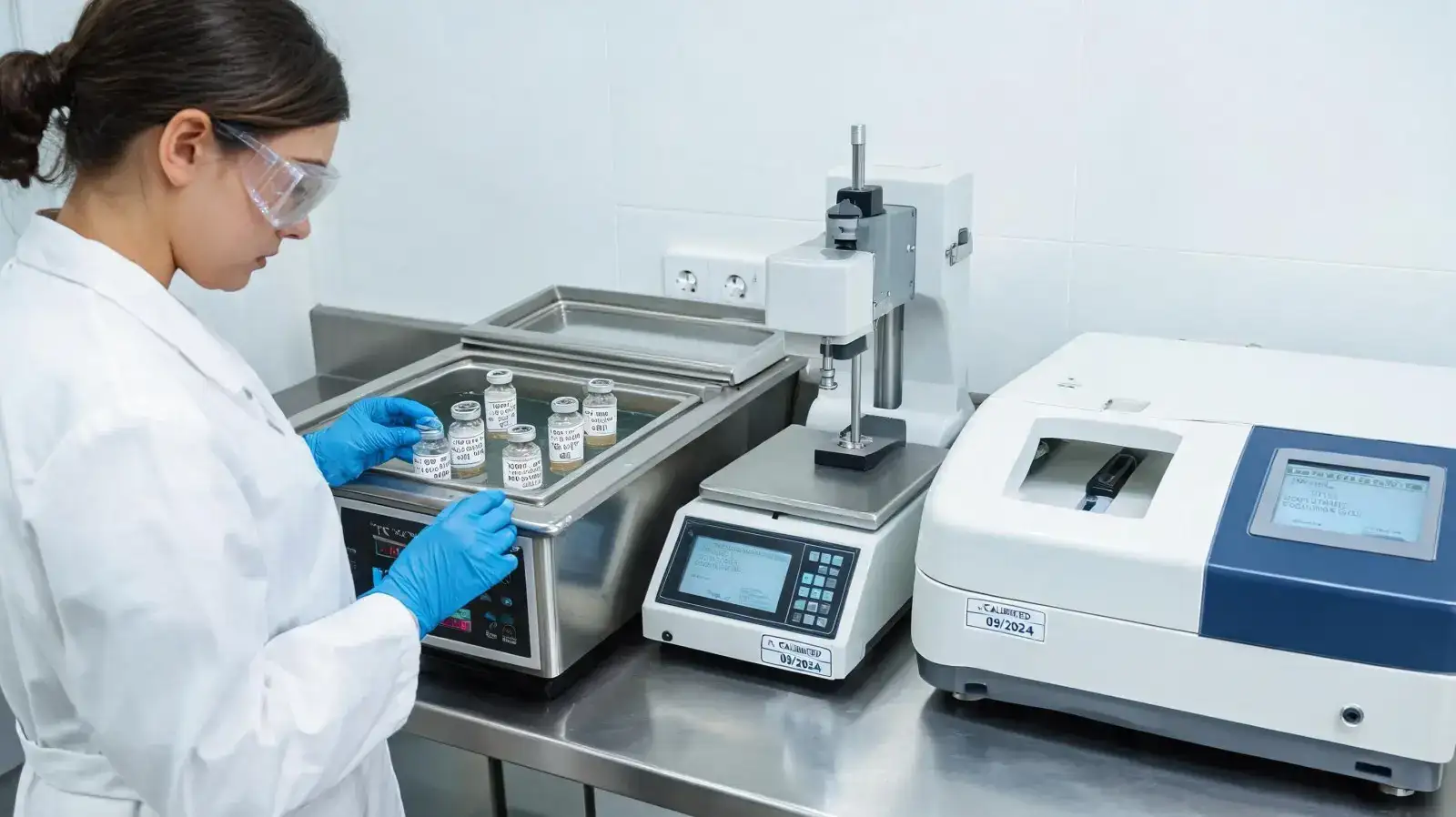
Raw Material Source and Process Parameter Determinants of Thermal Stability
Gelatin thermal stability varies significantly by raw material source, with type I collagen from porcine skin and bovine hide delivering 3–5°C higher melting points than bone-derived gelatin under equivalent extraction conditions. Food Grade Gelatin thermal stability is directly controlled by collagen hydrolysis parameters during raw material production: when hydrolysis pressure is maintained at 0.18–0.22 MPa for 3–4 hours, the proportion of 80–120 kDa polypeptide fragments reaches 78–82%, delivering a melting point 4–6°C higher than gelatin produced under 0.15 MPa pressure for 6 hours. Hydroxyproline content ≥12.5% by mass, achieved only via controlled extraction of type I collagen from porcine skin or bovine hide, increases hydrogen bond density between polypeptide chains by 23%, raising helix dissociation temperature by 3°C. If crosslinking treatment during drying is omitted (a common low-cost supplier shortcut), gelatin loses 15% of re-helix capacity post-pasteurization, leading to irreversible flocculation in 0.5% w/w beverage matrices. A molecular weight polydispersity index (PDI) <1.8 is non-negotiable for thermal stable grades; PDI >2.2 results in 10–12% hardness loss in confectionery after 6 months of storage at 30°C.
| Raw Material Source | Typical Hydroxyproline Content | Standard 10% Solution Melting Point | Applicable Scenarios |
|---|---|---|---|
| Porcine Skin (Type I Collagen) | 12.8–13.5% | 28–34°C | Tropical confectionery, pasteurized clear beverages |
| Bovine Hide (Type I Collagen) | 12.2–12.9% | 27–32°C | Standard confectionery, UHT beverage |
| Bovine Bone (Type I + Type II Collagen) | 10.5–11.2% | 23–27°C | Low-temperature processed confectionery, non-heat-treated beverages |
Industry Low-Grade Traps and Rapid On-Site Identification Methods
Suppliers often market 180 bloom standard gelatin as “thermal stable” by adjusting test conditions: measuring melting point in 15% w/w solutions instead of the standard 10% w/w, artificially inflating results by 3–4°C. If the product specification does not explicitly state pasteurization resistance test conditions (72°C, 15s, 0.5% w/w solution), the grade will likely exhibit 5–8% transmittance loss in real beverage production, leading to batch rejection. Some suppliers blend 20–30% of low-molecular weight hydrolyzed collagen into thermal stable gelatin to cut cost, reducing proline/hydroxyproline content to 9–10%, which lowers melting point by 3–5°C without changing initial bloom strength readings. If COA (Certificate of Analysis) does not include molecular weight distribution data, the batch carries a 27% risk of failing thermal stability compliance during shelf life.
Rapid on-site identification methods for low-grade gelatin: 1. Dissolve 10g gelatin in 90g 50°C deionized water, cool to 25°C and hold for 4h, place in 30°C water bath for 2h; if gel collapses completely, the melting point is below 28°C and fails thermal stability requirements; 2. Measure 10% gelatin solution pH, if pH <4.8, the product has undergone excessive hydrolysis and will exhibit 10–15% lower thermal stability than stated values; 3. Weigh 2g dry gelatin powder, calcine at 600°C for 2h, if ash content exceeds 2%, the product is blended with inorganic fillers or low-grade hydrolyzed collagen.
| Parameter | Compliant Thermal Stable Gelatin (Porcine Skin) | Typical Low-Grade Counterfeit | Common Fraud Method |
|---|---|---|---|
| Melting Point (10% w/w) | 28–34°C | 23–26°C | Tested at 15% w/w concentration to falsify higher values |
| Hydroxyproline Content | ≥12% | 9–11% | Blended with 20–30% hydrolyzed collagen to cut cost |
| 80–120 kDa Fraction | ≥75% | 45–55% | Over-hydrolyzed to reduce production time by 40% |
| Pasteurization Transmittance Loss | ≤2% | 6–9% | Omits post-extraction crosslinking treatment |
Mandatory Specification Thresholds for Procurement
| Parameter | Acceptable Threshold | Test Standard Reference | Non-Compliance Commercial Impact |
|---|---|---|---|
| Melting Point (10% w/w aqueous) | ≥28°C | AOAC 990.27 | 3.2% higher post-transit deformation per 1°C below threshold |
| Molecular Weight Distribution (80–120 kDa fraction) | ≥75% | USP <467> Gel Permeation Chromatography | 4% higher dosage required per 5% below threshold, $140 per ton cost increase |
| Pasteurization Transmittance Loss (0.5% w/w, 72°C/15s) | ≤2% | IFST 012-2022 | 1.2% higher batch rejection per 1% above threshold |
| Hydroxyproline Content | ≥12% by mass | AOAC 990.26 | 2°C lower melting point per 1% below threshold |
| Polydispersity Index (PDI) | ≤2.0 | USP <467> Gel Permeation Chromatography | 2% higher 6-month texture loss per 0.2 above threshold |
Production Line Validation Protocol for Incoming Batches
Before full production run, perform a 50L pilot scale verification: prepare 10% w/w gelatin solution, heat to 72°C for 15s, cool to 25°C and measure gel strength; if strength retention is <90%, the batch will cause 8–10% texture loss in finished confectionery. For Functional Beverages applications, prepare 0.5% w/w solution, adjust pH to 4.5, pasteurize and store at 4°C for 72h; if turbidity exceeds 0.5 NTU, the batch will lead to sedimentation within 3 months of shelf life. For confectionery formulation trials, produce 10kg of gummies, store at 35°C for 72h; if deformation rate exceeds 2%, the batch is unsuitable for tropical market distribution. Incoming batch failure rate of >5% from a supplier justifies immediate re-evaluation of the procurement contract, as hidden costs of non-compliance exceed 15% of annual gelatin spend.
ROI of Switching to Verified Thermal Stable Grades
ROI calculation premise: applicable to confectionery lines with annual output ≥10,000 tons, beverage lines with annual output ≥5,000 tons, targeting markets with average seasonal temperature ≥28°C for ≥3 months per year; excludes special formulations with >40% polyol content or pH <4.0. A 2023 trial at a 30,000-ton annual output gummy manufacturer switching from standard 150 bloom gelatin to verified 220 bloom thermal stable grade reduced post-transit complaint rates from 11.8% to 1.2%, cutting after-sales costs by $890k annually. For a 20,000-ton annual output clear collagen beverage line, the grade switch reduced pasteurization-related batch rejection from 9.7% to 0.8%, delivering $720k annual savings in raw material and downtime costs. The 12–15% higher per-kilogram cost of verified thermal stable gelatin is offset by 18–22% lower dosage requirements in low-sugar formulations, delivering a net 6.3% reduction in total ingredient cost. Full conversion of a confectionery line to verified thermal stable grades delivers payback within 3.7 months on average, with no additional capital expenditure required for existing production equipment. Reference the Technical Whitepaper: Precision Grading and Quality Standards of Bioactive Collagen Peptides (2026) for additional grade verification methodologies.

Procurement and R&D Coordination Action Plan
Update raw material procurement specifications to include mandatory reporting of molecular weight distribution, hydroxyproline content and pasteurization resistance data, with test conditions explicitly referenced to internal IFST 012-2022 standards. Implement 10% batch random testing of the above parameters upon delivery, with non-compliant batches subject to immediate return and 10% supplier penalty as per contract terms. For new supplier qualification, require a 500kg pilot batch for 3-month accelerated aging testing (40°C, 75% RH) before full volume procurement approval. Schedule quarterly joint review between R&D and procurement teams to cross-verify batch performance data against commercial loss records, adjusting supplier evaluation criteria to prioritize thermal stability compliance over per-kilogram purchase cost. For technical support, formulation optimization or supplier qualification verification, contact our dedicated gelatin application technical team via gel-tech@ingredienttech.com, with 48-hour on-site support available for production lines with annual output ≥20,000 tons. Contact Technical Team